
Head in the Clouds
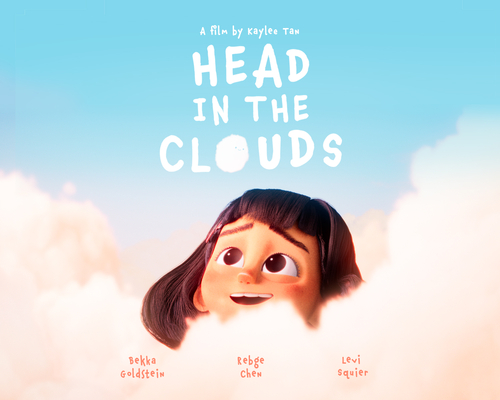
DescriptionIn the production of my short film, I faced the challenge of simulating and rendering clouds, despite having no prior experience in this area. The success of my film depended on the appealing depiction of clouds, which played a central and pivotal role in the storytelling. To tackle this challenge, I conducted extensive online research, leading me to discover Houdini, a renowned program for cloud rendering.
During my summer internship as a CG Generalist at Hornet, I participated in Houdini office hours, where I gained crucial insights into Houdini and the complexities of volumetric nodes (VDP). These insights proved invaluable in my quest to create clouds that balanced realism and stylization. I aimed to control the clouds' shapes while imbuing them with fluffy, realistic textures.
Inspired by a painting of pink clouds from the New York Public Library, I established a color palette to make the clouds resemble cotton candy. It was essential to make the clouds irresistibly charming, drawing both the film's protagonist and the audience into the ethereal cloud world, away from the mundane classroom.
To achieve this, I constructed the cloud geometry base in Maya and Zbrush, providing greater control over their form. After finalizing the cloud shapes and its placement in the layout phase, I transferred the geometry to Houdini, implementing the node trees I had designed during my research. These cloud models were then exported as alembic caches and returned to Maya for rendering.
For complex shots with dynamic camera movements, I used Arnold for lighting and rendering the clouds. I then composited them with sky matte paintings in Nuke, creating depth and visual impact in my shots. This innovative approach to simulating and rendering clouds not only transformed my short film but also reflected my dedication to achieving a high level of visual storytelling.
During my summer internship as a CG Generalist at Hornet, I participated in Houdini office hours, where I gained crucial insights into Houdini and the complexities of volumetric nodes (VDP). These insights proved invaluable in my quest to create clouds that balanced realism and stylization. I aimed to control the clouds' shapes while imbuing them with fluffy, realistic textures.
Inspired by a painting of pink clouds from the New York Public Library, I established a color palette to make the clouds resemble cotton candy. It was essential to make the clouds irresistibly charming, drawing both the film's protagonist and the audience into the ethereal cloud world, away from the mundane classroom.
To achieve this, I constructed the cloud geometry base in Maya and Zbrush, providing greater control over their form. After finalizing the cloud shapes and its placement in the layout phase, I transferred the geometry to Houdini, implementing the node trees I had designed during my research. These cloud models were then exported as alembic caches and returned to Maya for rendering.
For complex shots with dynamic camera movements, I used Arnold for lighting and rendering the clouds. I then composited them with sky matte paintings in Nuke, creating depth and visual impact in my shots. This innovative approach to simulating and rendering clouds not only transformed my short film but also reflected my dedication to achieving a high level of visual storytelling.
Contributor
Director
Producer
Event Type
Computer Animation Festival
TimeWednesday, 13 December 20239:00am - 6:00pm
LocationMeeting Room C4.2, Level 4 (Convention Centre)